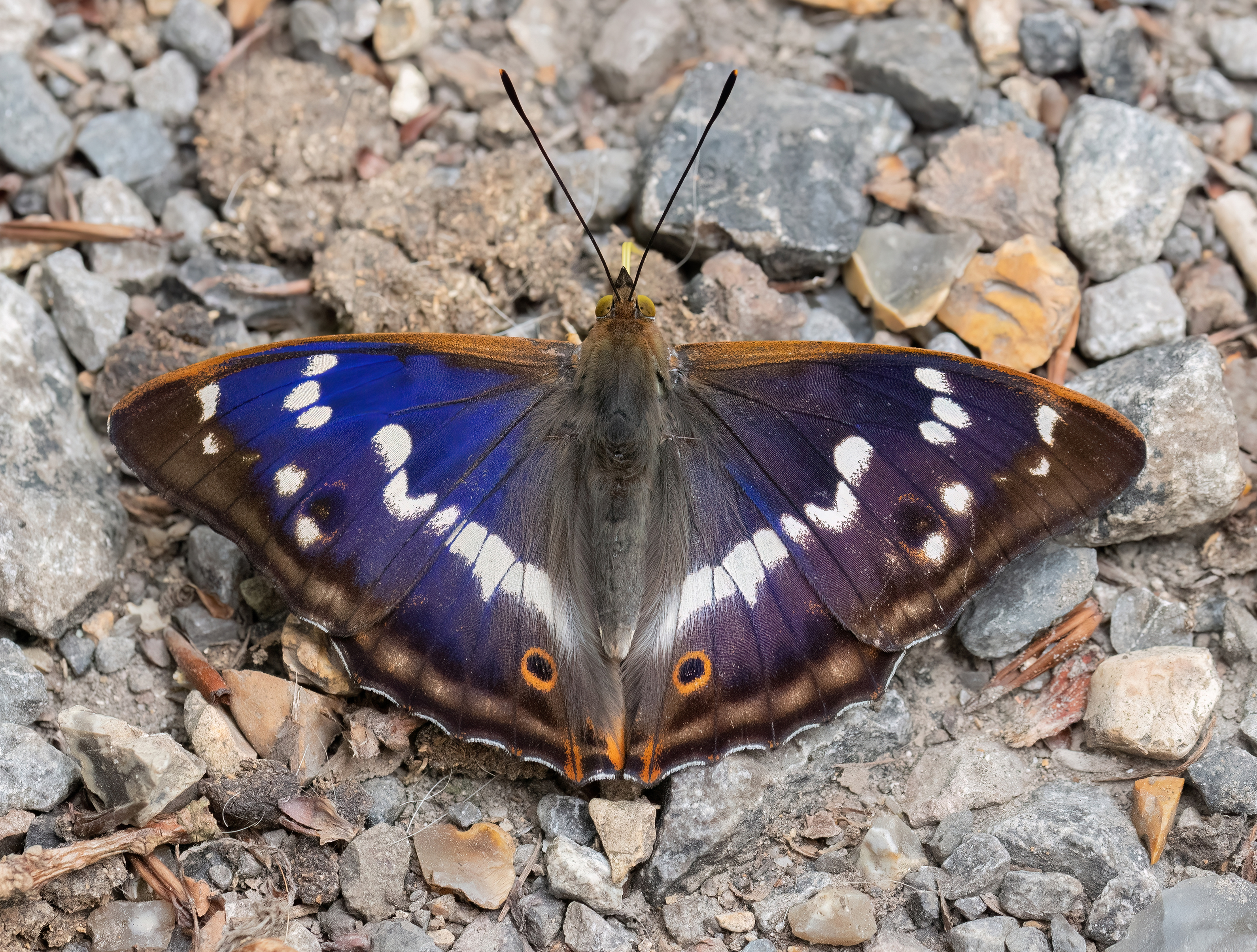
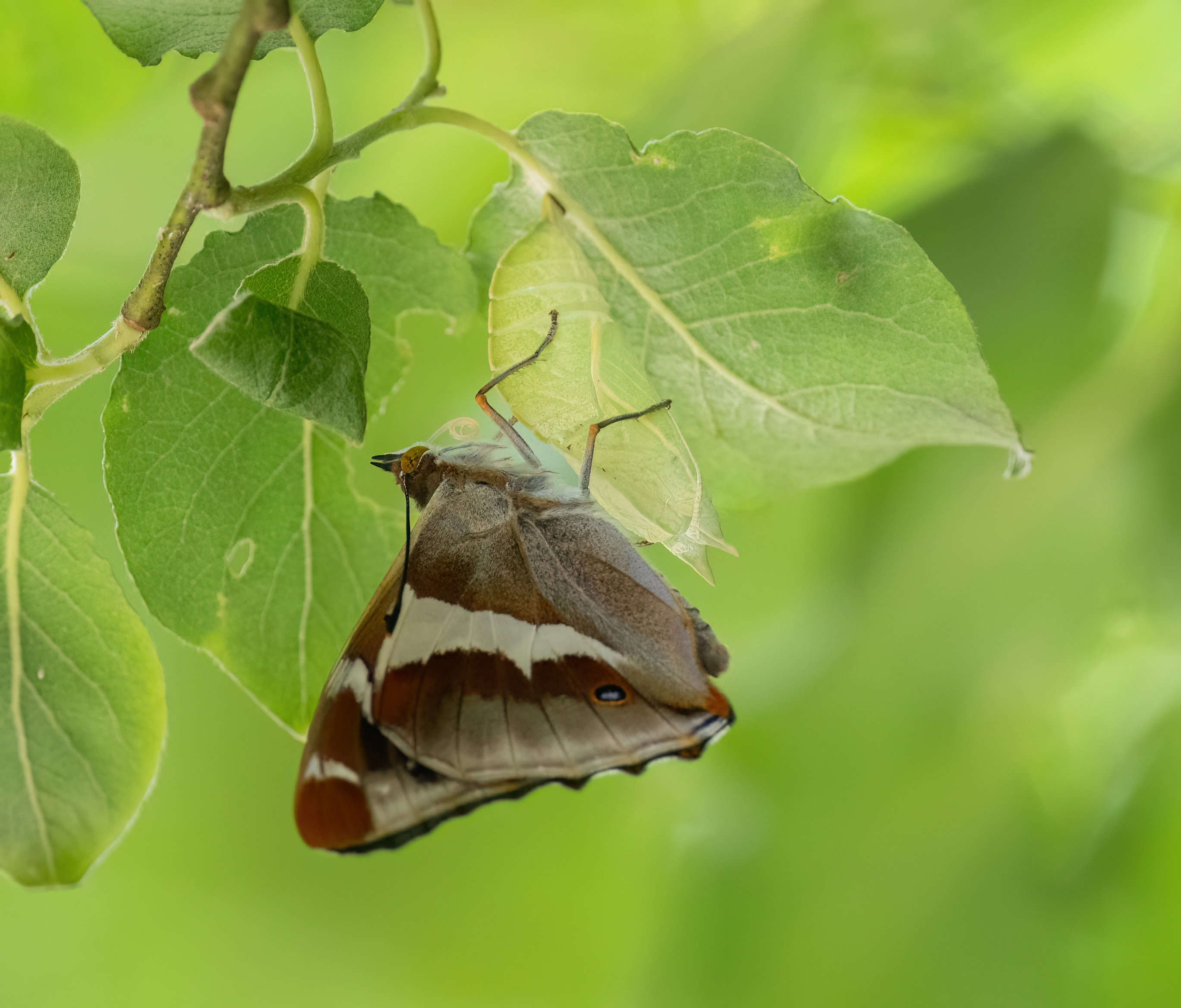
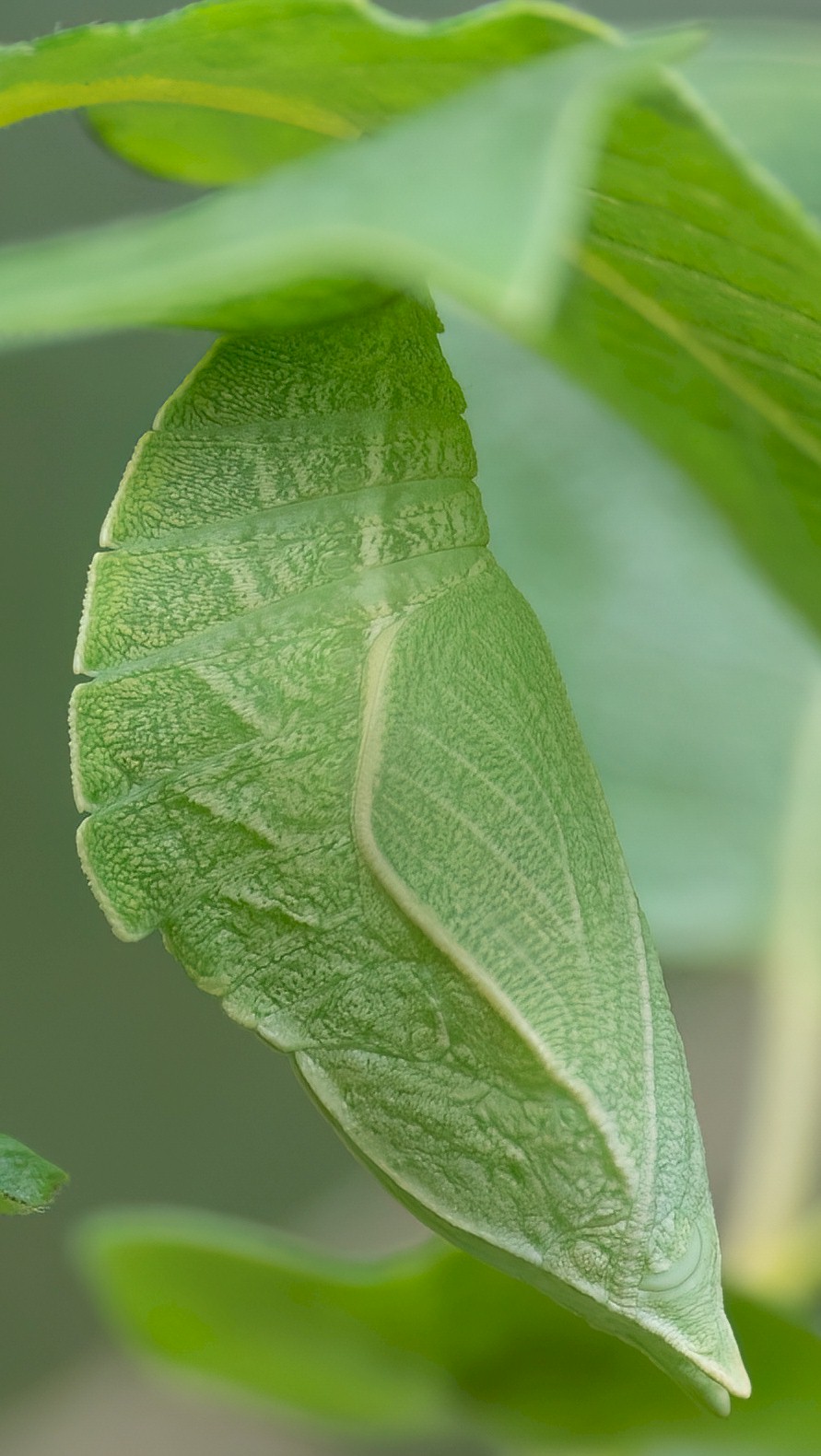
Tower and Town, September 2025 (view the full edition) (view the full edition)Nature Notes: Butterflies2025 has been a particularly good season for butterflies, and you may have noticed more Peacocks, Red Admirals, Meadow Browns, Gatekeepers, Ringlets, or Brimstones in your garden than in previous years. The warm spring and summer has led to an early emergence for many species - notably in Savernake Forest the elusive Purple Emperor (Apatura iris) has appeared at least a week earlier than over the last few years, and in good numbers too. Like most butterfly species, Purple Emperors are highly specific in their choice of host plants. Females lay their eggs directly on these plants so that, upon hatching, the caterpillars have immediate access to a suitable food source. Peacock, Red Admiral, and Small Tortoiseshell rely on Common nettle (Urtica dioica), while the Duke of Burgundy prefers Cowslip (Primula veris). In contrast, the Purple Emperor's host plant is typically Sallow (Salix spp.), also known as Goat Willow. Males are the first to emerge, This year was particularly special for me, as it marked the first time I've ever seen a Purple Emperor pupa case. What struck me most was how well-camouflaged it was - perfectly mimicking the shape and colour of a Sallow leaf and blending almost invisibly among the foliage. Citizen science plays a vital role in helping us understand how butterfly populations are faring year after year. The Purple Emperor population in Savernake, for instance, is carefully monitored each season - from egg-laying through to adult emergence - providing valuable data on breeding success, survival rates, and changes in distribution over time. You can also contribute by submitting your sightings to the Wiltshire Branch of Butterfly Conservation via their sightings page: https://www.wiltshire-butterflies.org.uk/sighting/new Helen Llewelyn |