Tower and Town, March 2026 (view the full edition) (view the full edition)The March ChorusAfter a rather damp and grey February, spring is finally on its way. Our spring migrants will soon return, with our first arrivals such as Wheatear and Chiffchaff turning up around mid-March, followed not long after by species like Willow Warbler, Blackcap and Ring Ouzel. March is the time of year when I get excited as a standout moment in my wildlife calendar takes place. It's time to take a trip up to Savernake Forest to witness a true wildlife spectacle. Waiting for a dry, sunny day, I head up into the forest, strolling through the arboretum and onwards towards Thornhill, one of the larger ponds in Savernake. As I approach the pond, I'm greeted by a remarkable, loud chorus of low-pitched, soft, repeating "croaks" mixed with high-pitched "qwark-qwark-qwarks." The first time I heard this fascinating sound a few years ago, I assumed it was birds singing, but I couldn't figure out what could be making such a song. It wasn't until I reached the edge of the pond and saw the water teeming with movement that the mystery was revealed.
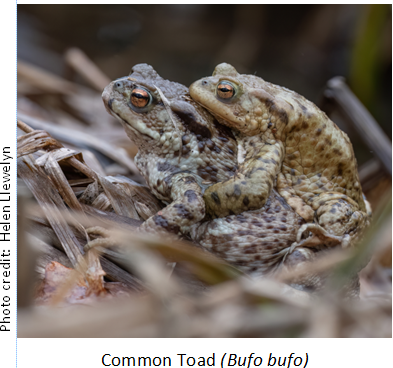
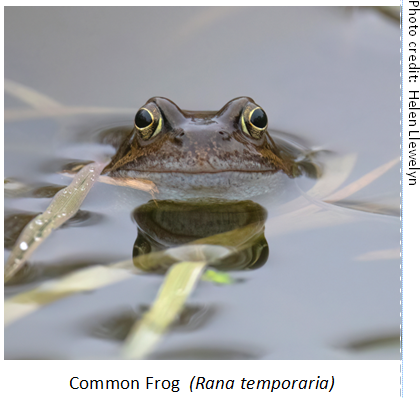
Frogs and toads were scattered throughout the water and along the pond's edge, and I had to tread carefully to avoid stepping on one. The frogs seemed to stick to the left-hand side, while the toads kept to the right. It's the males that call out, singing to attract females and establish their territories. Incredibly, neither species will remain in the pond over winter. Both toads and frogs, hibernate in damp sheltered spots such as under a log pile or a stone. Each spring, they migrate from their overwintering grounds, faithfully following the same routes year after year to reach their ancestral breeding ponds. Whether that pond lies in a garden or within the forest, I find it amazing that they know exactly where to go. Male toads often arrive at the pond before the females and will aggressively compete to secure a grip on a female. Sometimes unattached males form "mating balls," with multiple males clinging to a single female. On one visit, I counted eight males attempting to attach themselves to one poor female, with more incoming. The sheer weight of the males, their constriction, and the time spent underwater can overwhelm the female, sometimes causing her to drown or be crushed. Eventually, as the morning subsides, the frenzy settles. The pond is now filled with toad and frog spawn, and the chorus has faded. I make my way back through the forest, carrying the memory of the hidden wonders and the remarkable spectacle of nature that fills the pond each spring.
Helen Llewelyn |