
Tower and Town, May 2026 (view the full edition) (view the full edition)Nature NotesIn mid-May, a very rare and delicate jewel of the chalk grassland begins to emerge. Although it has declined dramatically in recent years and is now a Red List species, it seems to be thriving on a small north-facing patch of chalk grassland on the edge of Marlborough.There is always a moment of unease when none appear. Further south in Wiltshire, the Duke of Burgundy is often already on the wing, and I find myself arriving too early, scanning empty grassland and beginning to wonder. Here, they often emerge up to a week later, sometimes more and so I wait, returning again and again in quiet anticipation.Even when they are present, they do not give themselves up easily. They fly low and fast, close to the ground, their movements sudden and fleeting. Though bright orange at a glance, they vanish against the mosaic of vegetation and shadow, their small size making them strangely elusive. A flicker, a hesitation, and then they are gone - leaving you questioning whether you saw them at all.The Duke of Burgundy butterfly host plant is cowslip, and it lays its eggs on the underside of the leaves. The species favours areas where grassland meets scrub, creating a balance of sun and shelter. These slightly cooler, moisture-retaining conditions support cowslips, while nearby scrub provides the right microclimate. The males emerge a few days before the females and they only live for 1 to 2 weeks. It was in 2018, while completing a butterfly transect, that I spotted my first ever Duke of Burgundy on this patch. That spring had been particularly warm, and it seemed some butterflies were dispersing more widely. I also saw a Small Blue in the same area - a brief sighting, as it was very active in the heat and didn't linger. I haven't recorded one there since.The following year, I counted just four individuals, suggesting that the butterfly I had previously seen was likely a female. She was quite worn and tatty, making it difficult to determine her sex with certainty. The year after brought another warm spring and a dramatic increase to over 30 individuals. Last year, despite a cold spring, I recorded 45. While this may not seem like a large number, for a species that has struggled in recent years, it represents a strong and encouraging colony. So far this year, the weather hasn't been too wet or cold, and I'm hopeful it will be another successful year. 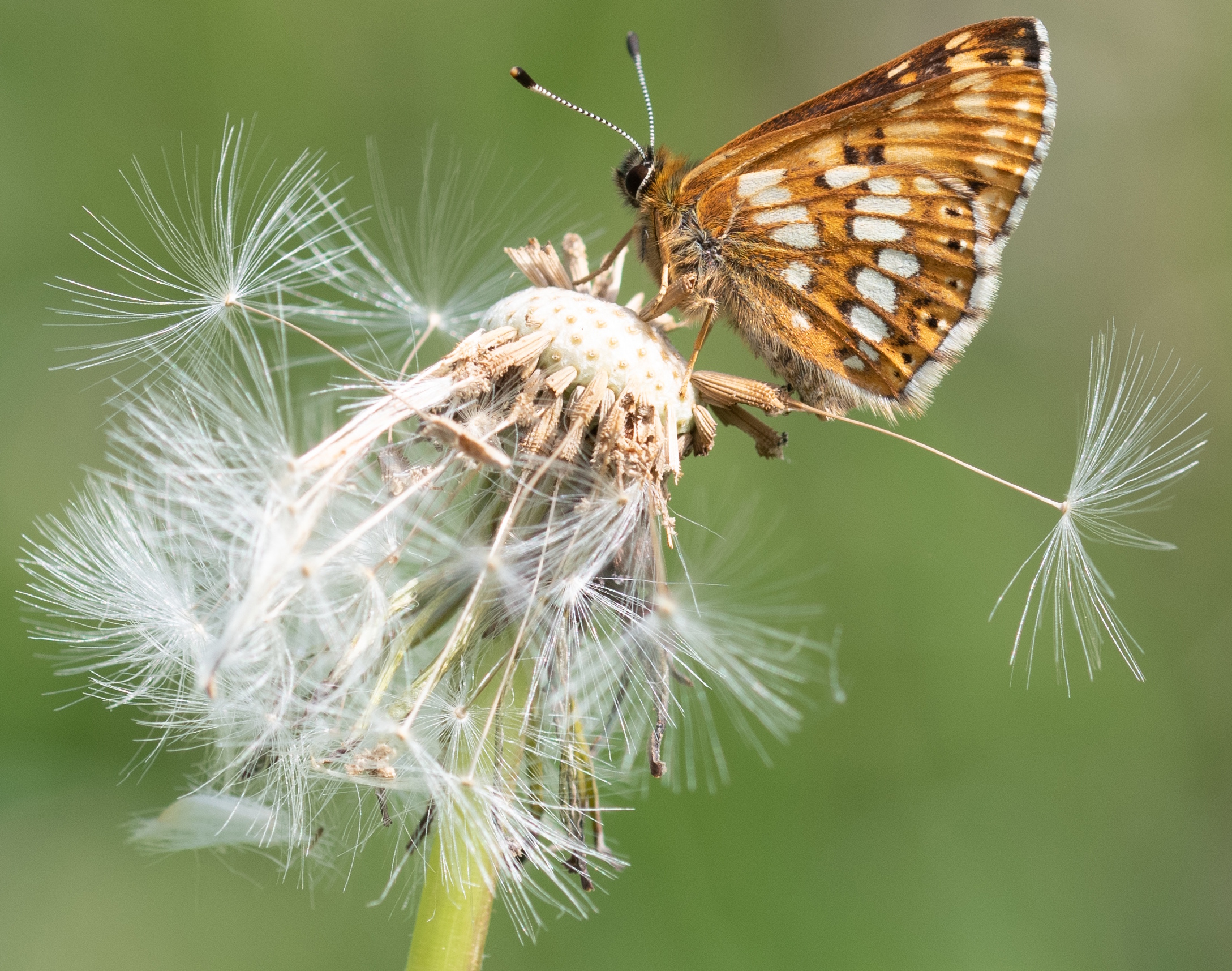 Helen Llewelyn |