
Tower and Town, November 2026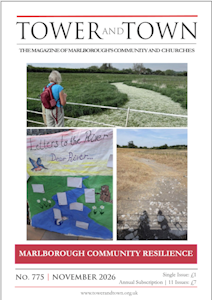 (view the full edition) Marlborough In An Uncertain WorldThese are certainly uncertain times, especially for the older among us who have known some 65 years of relative peace (at least in our own lands), quite easy travel, and some serious elements of social progress. Now we are faced by economic insecurities on five continents, four major wars (don’t forget Sudan), and three convincing possibilities of extinction, not only of our animals and plants, but of us humans. We should remember that things have ends, and that more than 99% of all the species that have ever lived on this planet have gone extinct, which might suggest that extinction is the norm. What is unusual is that all the threats that hang over our humanity, nuclear war, climate change, and the sinister novelty of A.I, are all caused by human activity. None of the millions of previous extinctions were the responsibility of the victim species, which mostly succumbed to ice ages, volcanic activity, or planet collisions with asteroids. Might we share a unique role as the only species that could preside over its own extinction? The good news could be that humans working together could moderate or remove what humans have introduced: nuclear disarmament, major reduction of CO2 emissions, and full regulation of A.I could all reduce threats, though they would need to do so on a planetary level, and our historical record of human cooperation over the millennia does not encourage much optimism. Since few of us have the means to conduct the above interventions ourselves, what can we do? It seems to me that the more we can work together to influence our elected representatives (whose vision often seems limited to no more than the next election) to cooperate to take the hard measures needed, the more likely are we to survive. And meanwhile Transition Marlborough can encourage us to link up with like-minded people at local, county and national level, to help preserve our great countryside and waterways, to grow more of our own food locally, encourage less polluting, more affordable, public transport, and to produce less waste. The new proposal of public funding of People’s Power projects across the land may soon give villages, towns and cities the chance harness the resources around them, get paid, and take a small, but direct, role in tackling the approaching crisis. Barney Rosedale |