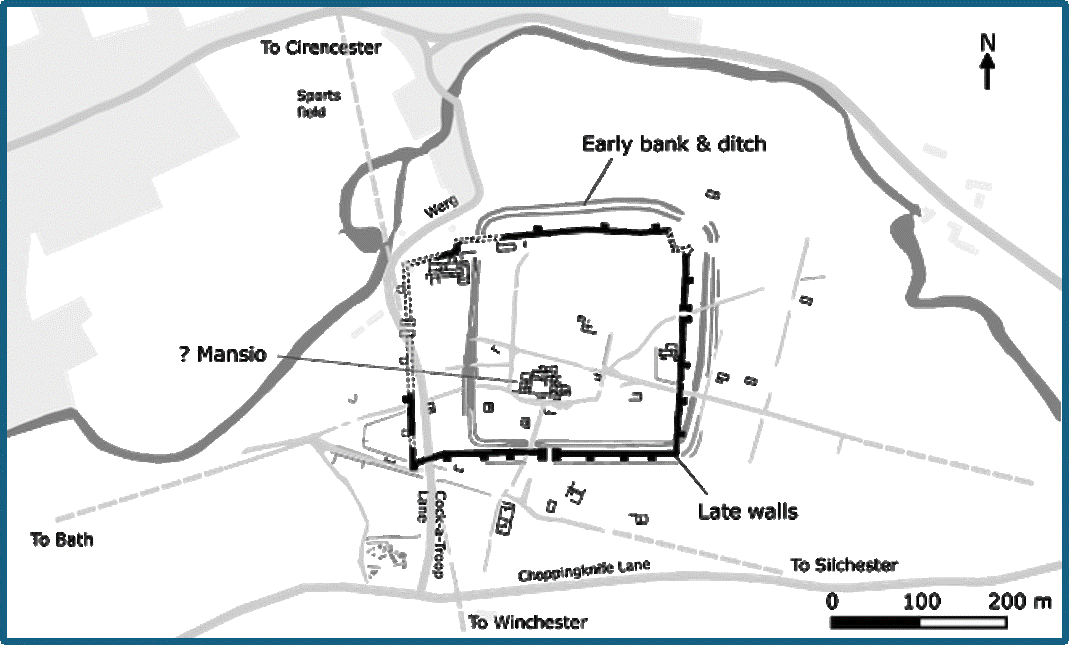
Tower and Town, June 2026 (view the full edition) (view the full edition)Roman MinalThe town was called Cunetio. We know this from a Roman route planning document. It was probably founded soon after the Roman invasion of AD 43 and was in use to the late fourth century, probably longer. It was located at a junction of Roman roads, where the "Roman A4" towards Bath met roads running north to Cirencester and south to Winchester and Old Sarum.
Cunetio was probably a centre of local administration, a market, and home to craft and industrial activity. Several hoards of Roman coins have been found in the town. The best-known is a hoard of 54,951 silver coins discovered in 1978, the largest ever found from Roman Britain. In the fourth century a massive stone wall, with bastions and impressive gateways, was constructed. The scale of it suggests it was by imperial command. The town was clearly an important place, perhaps a collection point for taxes paid as grain, perhaps an army base. Britain was exporting grain to feed the Roman armies on the Rhine at this time, and Cunetio could have been part of the system. Maybe some of the wheat eaten by Roman soldiers on the Rhine frontier was grown in the fields of Mildenhall. Jeremy Foot |